Application requirements
I/O density, cycle time, motion or process requirements, field distances and maintenance needs are assessed together. This defines the requirements of the working system, not just individual products.
This batteries application uses IO-Link master and distributed I/O to address field control, reliable communication and maintainable commissioning.

I/O density, cycle time, motion or process requirements, field distances and maintenance needs are assessed together. This defines the requirements of the working system, not just individual products.
The proposed architecture combines IO-Link master and distributed I/O with the machine’s existing control infrastructure and communication protocols. Final product and module selection depends on site requirements.
ProControl can adapt the solution to local project requirements in Türkiye, from site assessment, I/O planning and protocol selection to panel layout, commissioning and after-sales support.
The technical workflow and visual information from the manufacturer are presented below.
The lithium battery pack production line is a critical stage in assembling power batteries from cells into battery packs, involving multiple processes such as cell sorting, module stacking, welding, inspection, and testing. Detection points are dispersed across the entire line, with digital and analog signals coexisting, placing high demands on the signal access capability and deployment flexibility of I/O modules. This case study focuses on a lithium battery pack production line, showcasing the practical application of Solidot's IO-Link bus I/O.
Solidot products used in this case
IOL7A-PN01B-8A
(IO-Link master, PROFINET Protocol)
IOL7A-16CB-M12
(IO-Link HUB, 16-channel configurable Digital, PNP)
IOL7A-A8C-M12
(IO-Link HUB, 8-channel voltage/current input/output compatible)

I. Equipment introduction
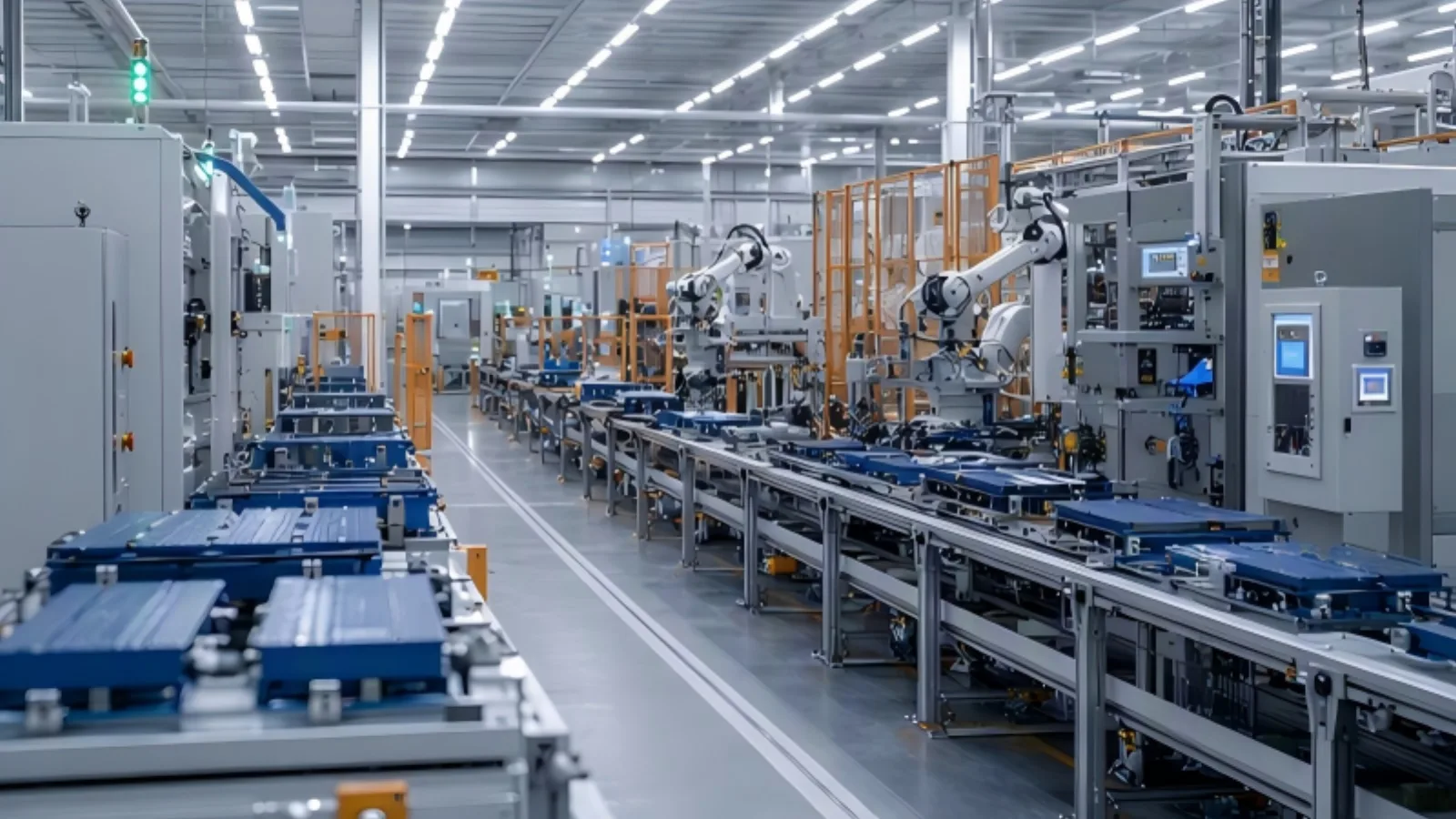
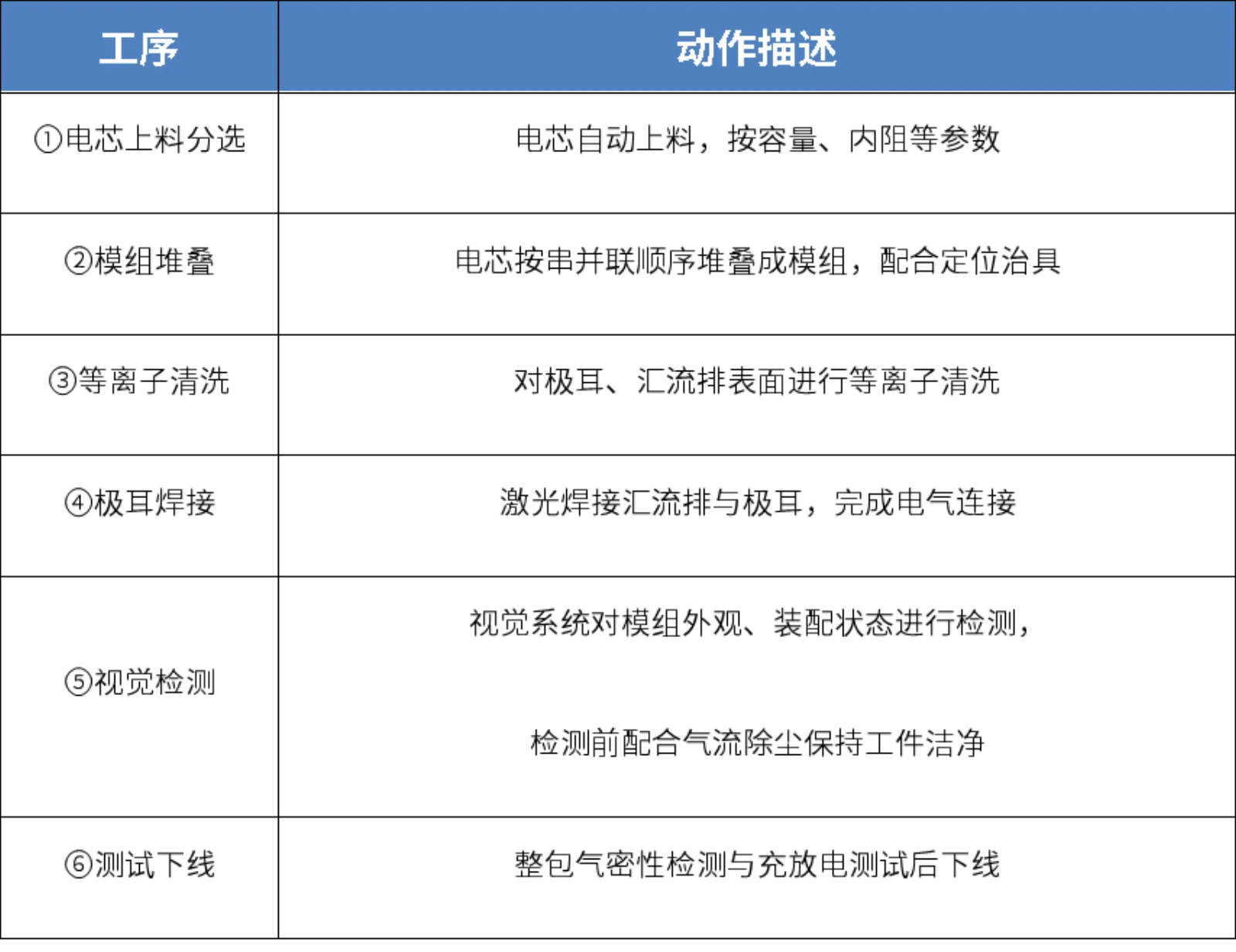
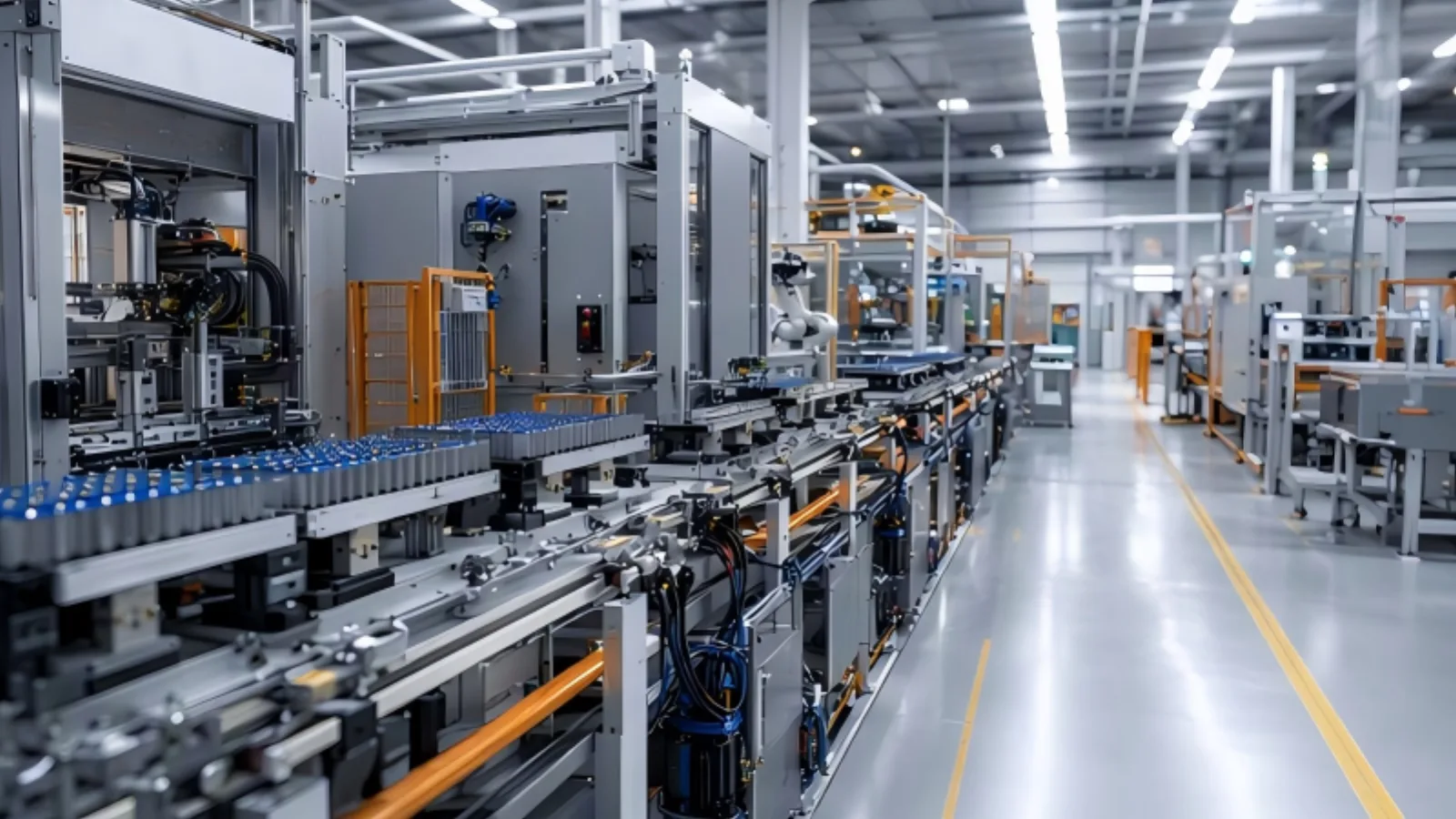
A lithium battery pack production line typically consists of a cell feeding and sorting unit, a module stacking unit, a plasma cleaning unit, a tab welding unit, an inspection unit, and a testing and unloading unit, completing the entire workflow from cell supply and module assembly to welding fixation and full-pack inspection and judgment.
II. Solidot solution
Detection points on the lithium battery pack production line are dispersed across multiple stations, including cell feeding, module stacking, welding, inspection, and testing. These stations require simultaneous access to digital signals such as cylinder action feedback, material-in-place detection, and safety protection, as well as analog signals such as air speed and distance measurement. With diverse signal types and dispersed points, high demands are placed on the signal access capability and deployment flexibility of I/O modules.
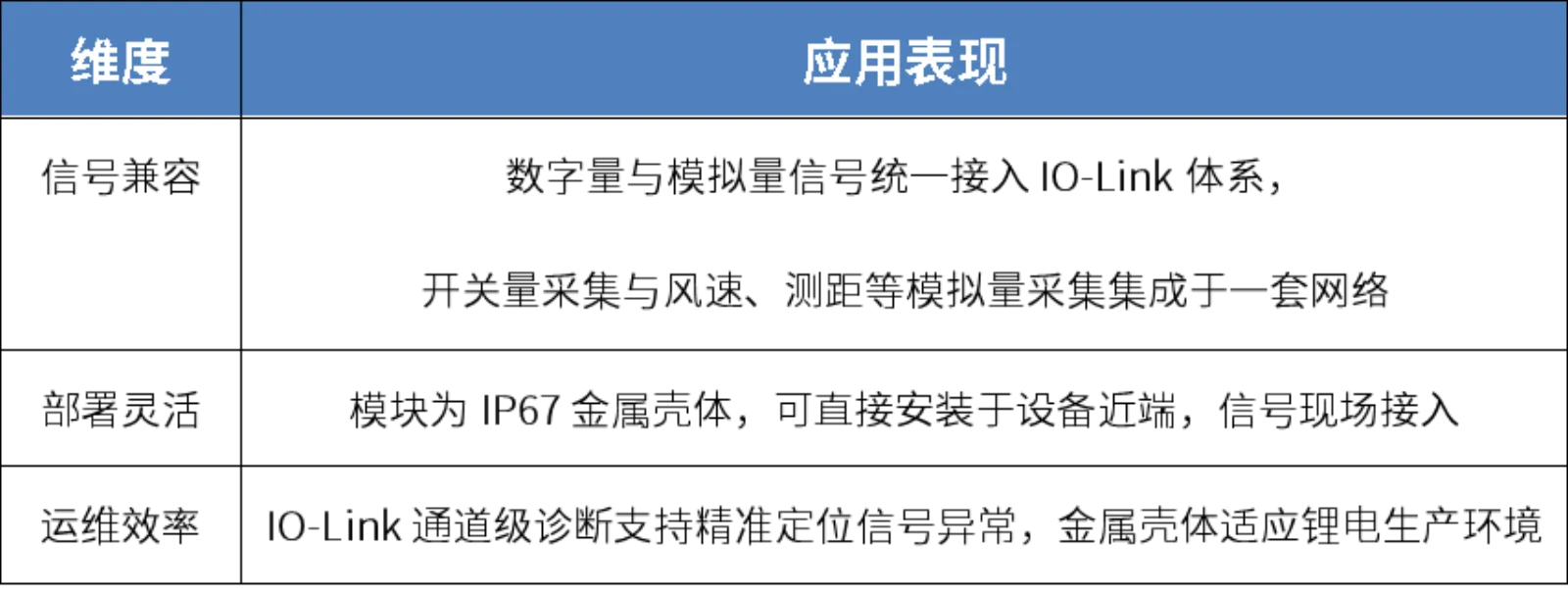
The solution adopts Solidot's IO-Link bus I/O architecture, using a combination of IO-Link masters and HUBs to integrate digital and analog signals from the field into a single unified network. The modules feature an IP67 metal housing and can be installed directly near the equipment, with three-wire sensors connected directly via M12 connectors, meeting the control requirements of dispersed stations and diverse signals on the pack line.
III. Solution architecture
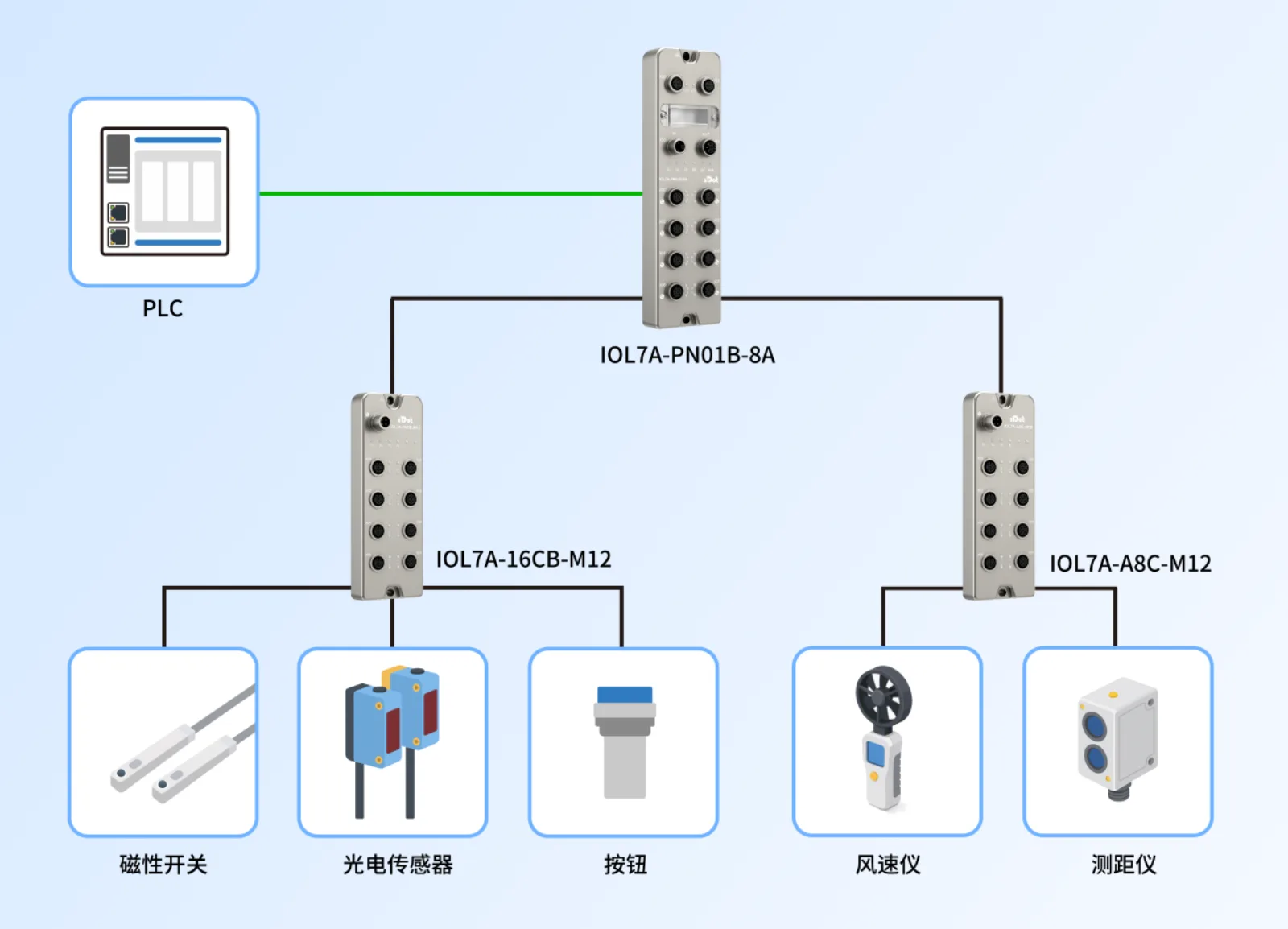
Control layer:
The Siemens S7-1500 PLC serves as the core controller, responsible for line-wide logic scheduling, inspection data processing, and cycle time coordination.
Network layer:
The IOL7A-PN01B-8A master connects to the PLC via PROFINET, while IOL7A-16CB-M12 and IOL7A-A8C-M12 serve as IO-Link slaves connected to the master, cascaded along the production line.
Field layer:
IOL7A-16CB-M12 handles digital signal acquisition and output at each station, covering cylinder action feedback, cell and module in-position, pallet in-position, safety protection, and operation button signals, and outputs drive signals for pneumatic actuators; IOL7A-A8C-M12 handles analog acquisition at stations such as visual inspection, plasma cleaning, and stacking positioning, connecting to anemometer and rangefinder signals.
IV. Application results
V. Solidot IO-Link bus I/O
Solidot IO-Link bus I/O currently offers products with two protection ratings, IP67 and IP20: the IP67 models are IOL7A (metal housing) and IOL7B (plastic housing); the IP20 model is IOL5, which supports an optional dust cover.
The product line offers diverse form factors and can be flexibly selected according to on-site conditions. Compatible with mainstream bus protocols such as EtherCAT and PROFINET, it provides multiple signal acquisition solutions including digital and analog types, and is widely used in demanding industrial scenarios such as lithium battery, 3C, and automotive manufacturing.