Application requirements
I/O density, cycle time, motion or process requirements, field distances and maintenance needs are assessed together. This defines the requirements of the working system, not just individual products.
This machining application uses XB6S modular remote I/O to address field control, reliable communication and maintainable commissioning.
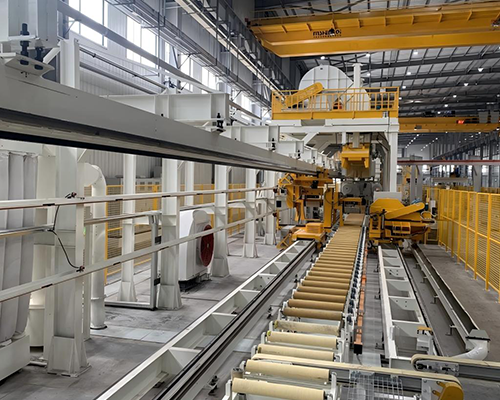
I/O density, cycle time, motion or process requirements, field distances and maintenance needs are assessed together. This defines the requirements of the working system, not just individual products.
The proposed architecture combines XB6S modular remote I/O with the machine’s existing control infrastructure and communication protocols. Final product and module selection depends on site requirements.
ProControl can adapt the solution to local project requirements in Türkiye, from site assessment, I/O planning and protocol selection to panel layout, commissioning and after-sales support.
The technical workflow and visual information from the manufacturer are presented below.
The aluminum drawing machine is a critical equipment in aluminum processing, responsible for uniformly pulling aluminum profiles from extruders to ensure dimensional accuracy and surface quality. With increasing industry demands for automation and intelligence, these machines require precise speed control, tension adjustment, and multi-device coordination during operation, placing higher demands on the real-time performance and stability of control systems. By implementing remote I/O technology, aluminum drawing machines achieve seamless signal acquisition, equipment synchronization, and process parameter optimization, helping enterprises enhance production efficiency and product quality to meet the high standards of modern aluminum processing.
Solidot products used in this case:
XB6S-EI2002 , XB6S-1616B , XB6S-0016B , XB6S-0032B , XB6S-C01SP
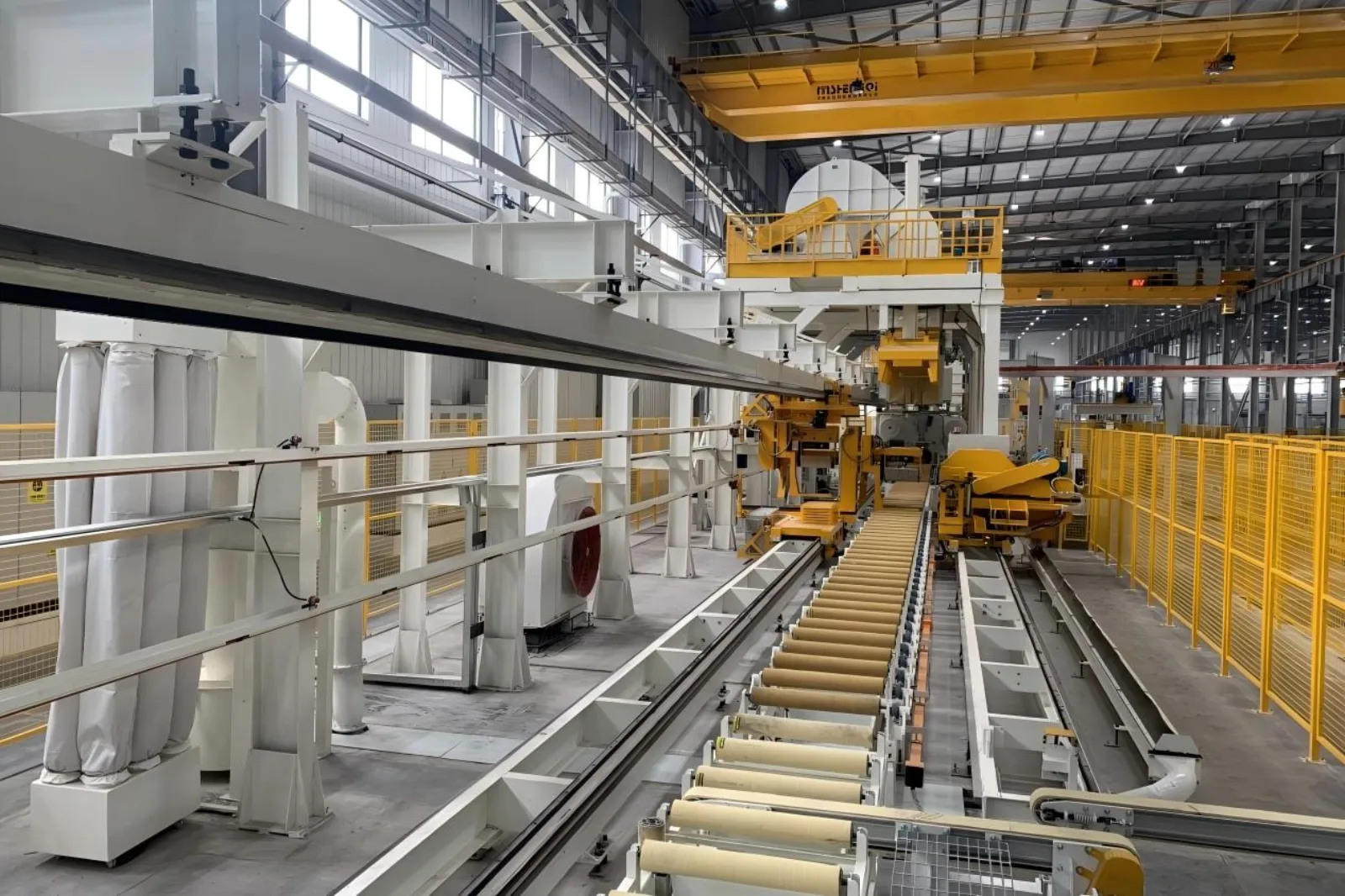
Core Workflow of Intelligent Aluminum Drawing Machine: Preparation → Operation Monitoring → Winding Adjustment → Finished Product Output
Preparation: Operators configure material specifications, drawing speed, and inverter parameters via HMI to initialize equipment, ensuring precise positioning of aluminum coils at the drawing inlet.
Operation Monitoring: Real-time monitoring of key parameters (drawing speed, motor current, material tension) with closed-loop control for dynamic adjustment, preventing deformation or breakage to ensure continuous production.
Winding Adjustment: Dynamic regulation of winding speed and tension based on material length and changes in winding diameter, ensuring uniform coiling while preventing quality issues from loosening or overtightening.
Finished Product Output: After drawing completion, profiles are smoothly transferred via conveyor to the next process, with production data recorded for quality traceability and process optimization.
Using EtherNet/IP protocol, Solidot modules—digital I/O module XB6S-1616B , digital output modules XB6S-0016B / XB6S-0032B , and serial communication module XB6S-C01SP —connect to Rockwell 1769-series PLC via coupler XB6S-EI2002 .
The client’s original bus solution suffered from complex decentralized wiring, low multi-device coordination efficiency, and significant drawing speed fluctuations. Additionally, weak EMI immunity in some modules caused high signal packet loss rates, frequently triggering production issues like roller slippage or material deformation.
After adopting Solidot’s Slice Remote I/O XB6S series:
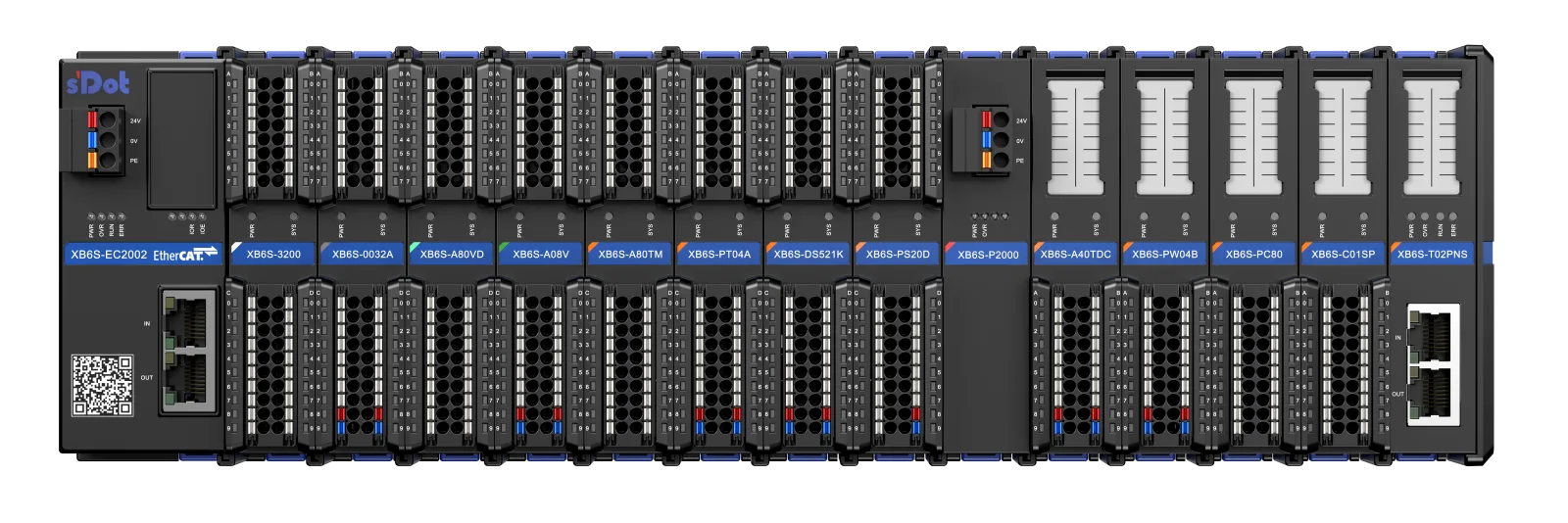
Solidot’s XB6S Slice Remote I/O series supports multiple bus protocols and integrates motion control/temperature acquisition modules. Key features include: