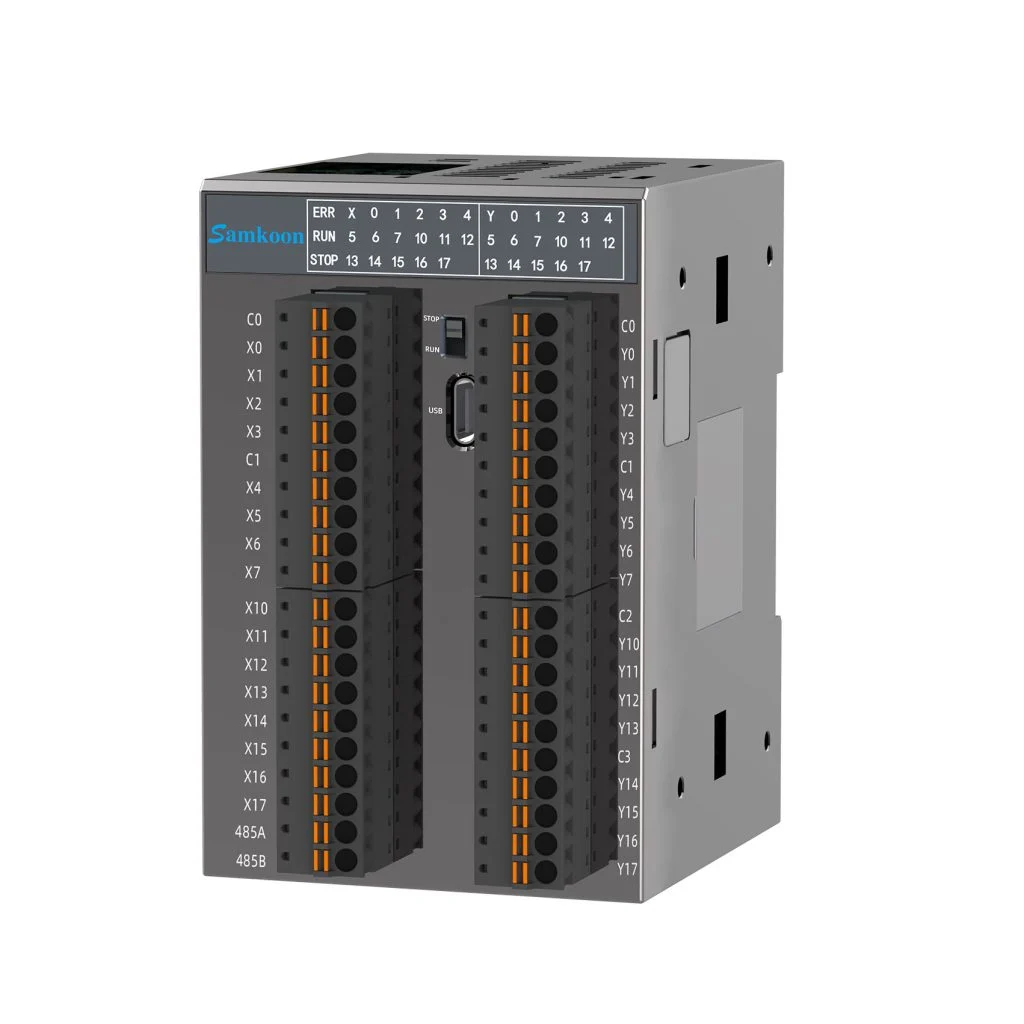
FAT-32MT-DC
Compact-motion candidate in the 16 DI/16 NPN transistor DO, four 200 kHz pulse-output and CAN-expansion class.
Open technical pageCompare Mitsubishi FX5U with Samkoon FAT/FAs/PRO candidates by I/O, motion, Ethernet/serial networking, expansion, GX Works3 and migration.
Samkoon FAT and FAs can be technical candidates for general machine-I/O control, while PRO targets motion-intensive applications. If Mitsubishi GX Works3, high-speed system bus, CC-Link IE and dedicated motion/device ecosystem must be retained, each function is separately proven in the exact configuration.
The exact configuration is selected after engineering review.
Compact-motion candidate in the 16 DI/16 NPN transistor DO, four 200 kHz pulse-output and CAN-expansion class.
Open technical page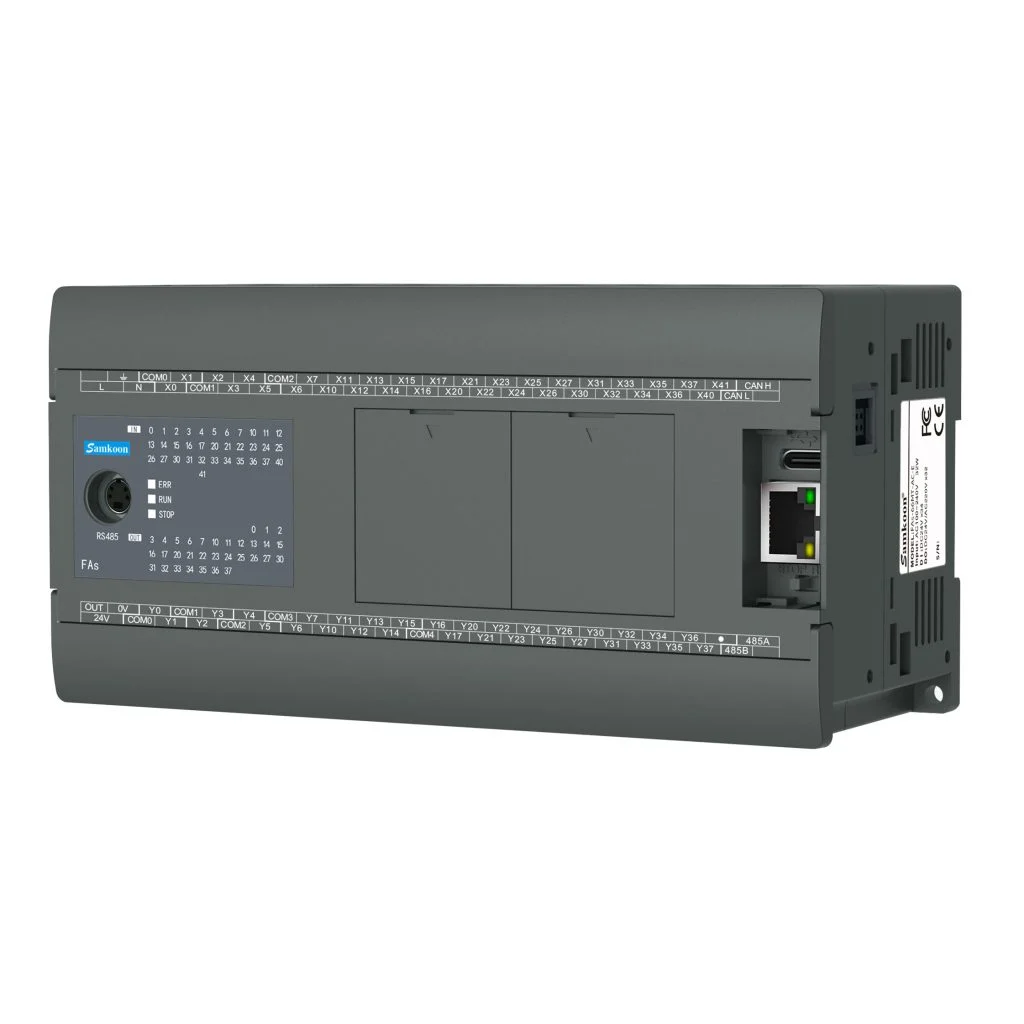
High-I/O candidate in the 34 DI/32 transistor DO, AC-supply, Ethernet and expansion class.
Open technical page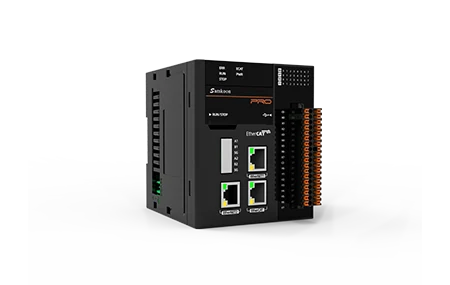
1 GHz+FPGA-based candidate for heavier pulse/motion workloads; exact axis and instruction scope requires a PoC.
Open technical pageThe table explains product architectures; it is not an exact order-code selection.
| Validation area | Mitsubishi Electric MELSEC iQ-F FX5U | Samkoon / ProControl candidate |
|---|---|---|
| CPU and program performance | FX5U-32M/64M/80M CPUs define program capacity, built-in I/O and performance class by exact model; FX5U, FX5UC, FX5UJ and FX5S are not the same CPU. | FAT, FAs and PRO are separate performance layers. Program size, instruction set, cycle time, retained memory and real-time behaviour are measured with the target application. |
| Built-in I/O and analogue | The FX5U model code determines DI/DO count and relay/transistor type; the family provides built-in analogue and expansion options. | FAT-32MT is in the 16/16 NPN class and FAS-66MT in the 34/32 transistor class. Analogue duties, electrical commons, load current and sensor type are verified with a separate module selection. |
| High-speed I/O and motion | FX5U provides high-speed counter, pulse and motion functions together with CPU, module, axis and GX Works3 configuration. | FAT-32MT is in the four 200 kHz pulse-output class; PRO is a candidate for heavier motion. Interpolation, axis count, pulse format, encoder and jitter are proven by PoC. |
| Ethernet and dedicated networks | FX5U uses built-in Ethernet/serial functions and Mitsubishi network/device integration through the exact CPU and expansion modules. | FAS-66MT-AC-E is in the Ethernet Modbus TCP/IP class; FAT-32MT in the serial and CAN-expansion class. CC-Link IE or Mitsubishi proprietary-protocol parity is not assumed. |
| System bus and expansion | FX5U expands through the Mitsubishi system bus with analogue, motion, communications and special-function modules. | Samkoon FAs/FAT use CAN-based expansion and plug-in options; module count, update time, power budget and isolation are verified for the exact combination. |
| GX Works3 and migration | An FX5U project is an integrated set of GX Works3 program, labels, function blocks, parameters, device comments and network configuration. | The SamSoar application is rewritten; Mitsubishi programs, function blocks, dedicated networks and parameters do not transfer directly. I/O, motion, communications and fault behaviour are accepted in comparative FAT. |
No. It is not a direct substitute until exact model, electrical, protocol-role, mechanical, software and certification checks pass.
The exact existing code, diagram or I/O list, PLC/network data, supply, environment and special functions in use.
No. The GX Works3 project and function-block structure do not transfer directly. The functional specification, I/O, state machines and timing are extracted and reimplemented in SamSoar.
Official manufacturer sources: Mitsubishi Electric MELSEC iQ-F CPU official page · Mitsubishi Electric iQ-F built-in functions official page · Samkoon PLC official family · Samkoon FAT-32MT-DC official page · Samkoon FAS-66MT-AC-E official page · Samkoon PRO-C16X16TB official page
This content compares manufacturer-published data under the same project requirement; it does not guarantee direct substitution or project compatibility. ProControl engineering must validate exact model, revision, protocol, electrical, safety and environmental conditions.
Share the exact existing code, I/O list, network and environment so we can identify the right solution without assumptions.