Application requirements
I/O density, cycle time, motion or process requirements, field distances and maintenance needs are assessed together. This defines the requirements of the working system, not just individual products.
This logistics application uses IO-Link master and distributed I/O to address field control, reliable communication and maintainable commissioning.
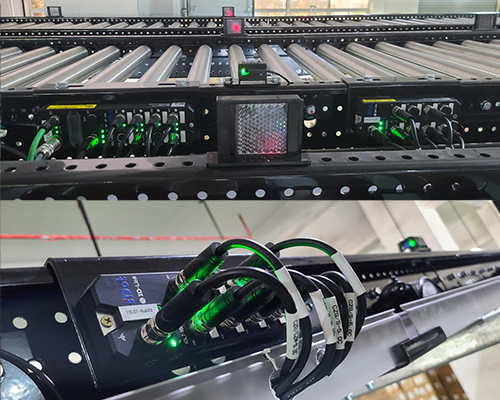
I/O density, cycle time, motion or process requirements, field distances and maintenance needs are assessed together. This defines the requirements of the working system, not just individual products.
The proposed architecture combines IO-Link master and distributed I/O with the machine’s existing control infrastructure and communication protocols. Final product and module selection depends on site requirements.
ProControl can adapt the solution to local project requirements in Türkiye, from site assessment, I/O planning and protocol selection to panel layout, commissioning and after-sales support.
The technical workflow and visual information from the manufacturer are presented below.
Logistics Box Conveyor Lines are automated logistics transmission systems based on standardized box carriers. They efficiently handle material flow requirements with multi-specification, high-frequency, and high-precision demands, enabling fully automated operations from product warehousing, storage, sorting, to outbound processes. These systems are widely used in e-commerce logistics, pharmaceutical distribution, food processing, automotive manufacturing, and 3C electronics industries.
Solidot Products Used in This Case
IOL7-PN01B-8A (IO-Link Master, PROFINET 8-channel Class-A interface, IP67)
IOL7-16CB-M12 (IO-Link Hub, 16-channel configurable I/O, PNP, IP67)
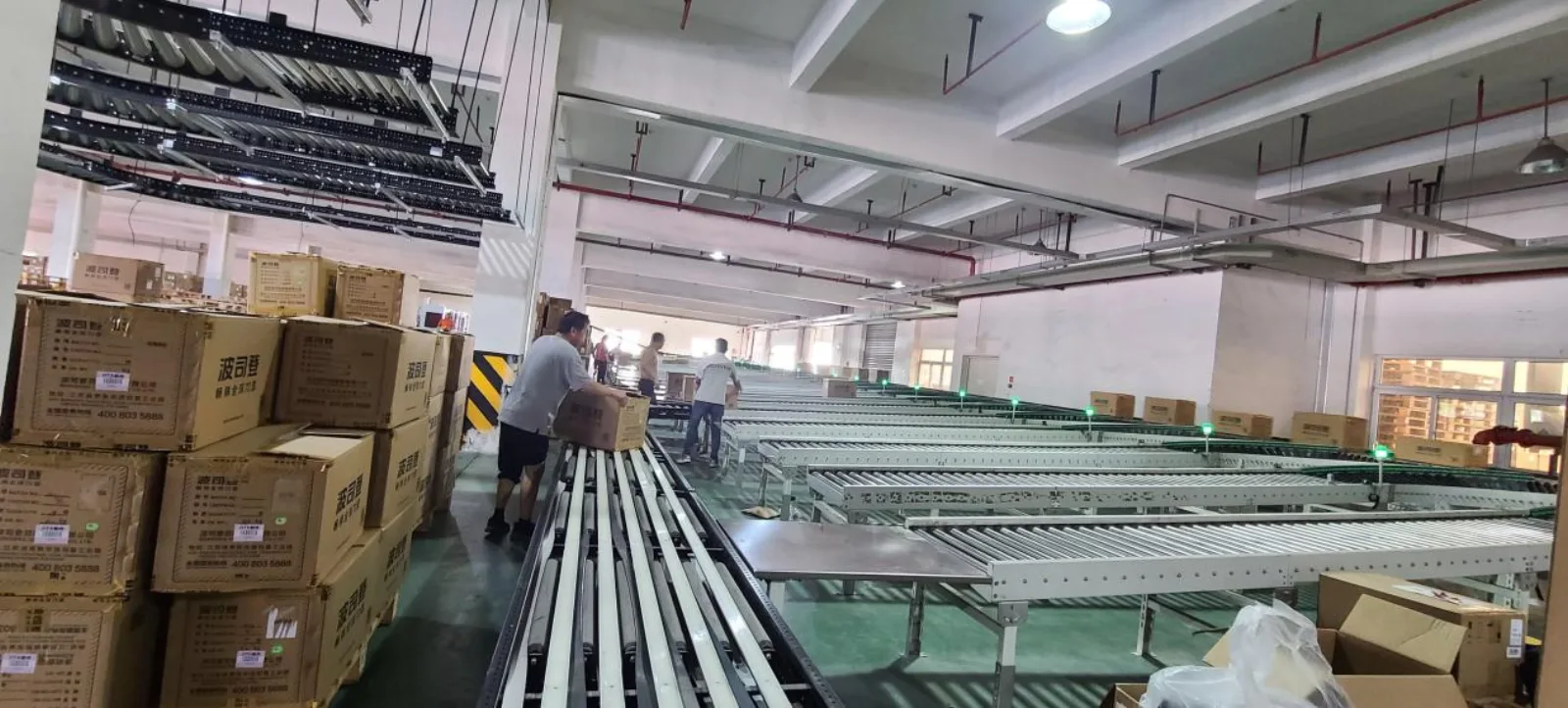
[Warehousing Conveyance & Information Binding] After boxes (products) are transported to the platform by vehicles, they enter the logistics center via the conveyor line. Photoelectric sensors on the line detect real-time box arrival signals, triggering QR code scanners to read box information. This data is bound to the Warehouse Management System (WMS), completing data entry and providing support for subsequent management and sorting.
[Transfer to Designated Shelves] Boxes with bound information are conveyed to the storage area. Position sensors monitor their movement trajectory in real time, ensuring precise docking at designated shelf transfer stations. At these stations, workers or AGVs unload the boxes from the conveyor line and transport them to specified storage shelves based on system instructions.
[Outbound Conveyance] When the system receives an order or delivery request, workers or AGVs retrieve boxes from storage shelves and transport them to the sorting line. Here, boxes are sorted according to preset rules, categorized by delivery zones or orders. After sorting, boxes are conveyed to the packaging area, then loaded onto trucks for shipment, completing the outbound process.
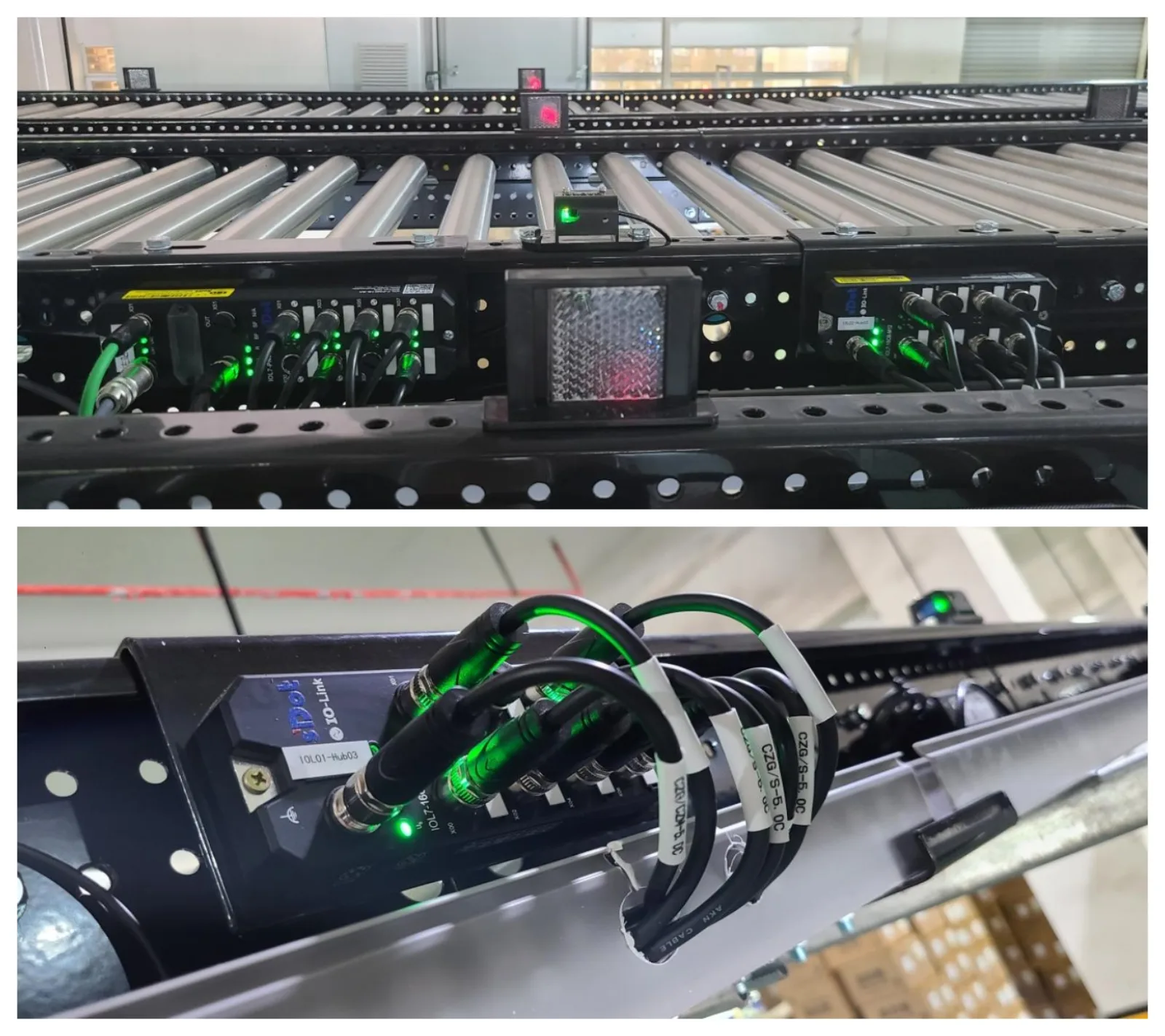
In this case, the logistics box conveyor line adopts the PROFINET communication protocol. A Siemens PLC connects to 17 Solidot IO-Link master modules ( IOL7-PN01B-8A ). Each master module links to 8 IOL7-16CB-M12 Hub modules, forming an efficient bus I/O system.
The IOL7-16CB-M12 Hub modules connect to various field devices, such as photoelectric sensors, motorized rollers, solenoid valves, and frequency converters, enabling signal acquisition and control command execution.
All field signals collected by the IOL7-16CB-M12 Hub modules are transmitted via IO-Link protocol to the IOL7-PN01B-8A master modules, which relay data to the PLC. The PLC’s control commands are then sent back through the Hub modules to orchestrate field device actions, ensuring efficient and stable conveyor line operation.
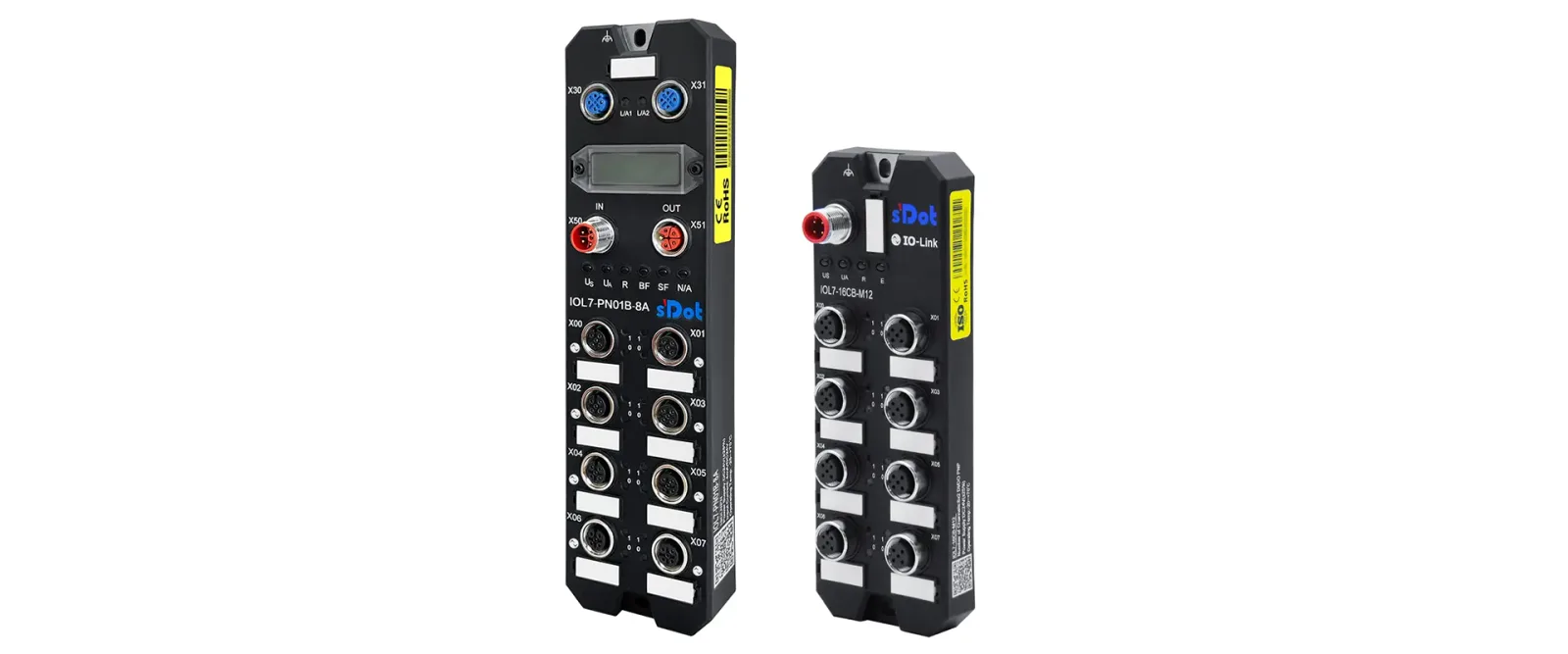
Solidot’s IO-Link Bus I/O supports protocols such as EtherCAT and PROFINET, featuring diagnostics, IP67 protection, shock resistance, and vibration resistance. Widely applied in industrial automation scenarios, Solidot’s IO-Link Bus I/O enables rapid device connectivity, high-efficiency data transmission, and intelligent system management, significantly enhancing production efficiency.