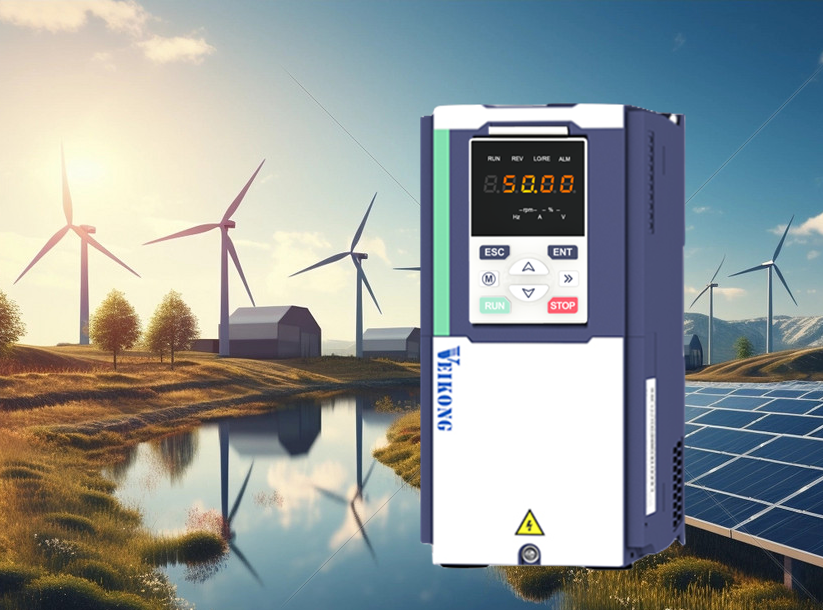
VFD500-PV
PV-pump candidate in the broader model table; array Voc, motor current, hybrid supply and field protection are engineered together.
Open technical pageCompare GD100-PV and VFD500-PV by PV-array window, MPPT, AC/DC hybrid operation, pump protection, motor, remote monitoring and field protection.
Both series belong to the PV water-pumping class; the right candidate is still determined by array Voc/Vmp calculation, pump-motor current, well flow, hybrid grid/generator behaviour and DC protection design. MPPT percentage alone is not a selection criterion.
The exact configuration is selected after engineering review.
PV-pump candidate in the broader model table; array Voc, motor current, hybrid supply and field protection are engineered together.
Open technical page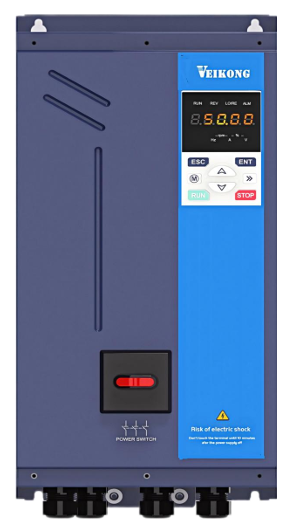
IP55 field solar-pump candidate; selected only within the published 220 V/380 V model and current limits.
Open technical pageThe table explains product architectures; it is not an exact order-code selection.
| Validation area | INVT GD100-PV | Veikong / ProControl candidate |
|---|---|---|
| PV array voltage | GD100-PV catalogues publish DC-input and MPPT windows by voltage class; Voc at the coldest site temperature is limiting. | For VFD500-PV, the selected model's minimum operating, MPPT and maximum DC-input rows are used; panel count is calculated against all three limits. |
| MPPT and low light | INVT publishes software MPPT and low-light running/sleep functions for GD100-PV. | VFD500-PV is assessed through MPPT+PID and low-light behaviour; field yield curves are measured instead of using conflicting marketing percentages. |
| AC/DC hybrid supply | GD100-PV offers PV and grid/generator hybrid operation options; transition topology depends on model. | VFD500-PV is assessed with automatic AC/DC switching; how both sources are connected must follow the official diagram. |
| Pump and motor | GD100-PV is sized by pump-motor rated current and voltage class; motor type depends on exact-model documentation. | VFD500-PV publishes IM/PMSM support; pump curve, pipe loss, static head and motor current are selected together. |
| Well/tank protection | GD100-PV publishes dry-run, water-level and related pump protections. | VFD500-PV dry-run, full-tank and low-water functions are tested by sensor type, threshold, delay and automatic restart. |
| Remote monitoring and DC safety | GD100-PV is offered with 4G/Wi-Fi monitoring options; the field installation also requires DC isolation and surge protection. | The VFD500-PV GPRS option is verified per model; DC isolator, fuse, SPD, grounding and cable polarity are engineered separately. |
No. It is not a direct substitute until exact model, electrical, protocol-role, mechanical, software and certification checks pass.
The exact existing code, diagram or I/O list, PLC/network data, supply, environment and special functions in use.
No. Test conditions, PV array, pump curve, cable loss, low-light algorithm and hydraulic system jointly determine daily water volume.
Official manufacturer sources: INVT GD100-PV official product page · INVT GD100-PV official catalogue · Veikong VFD500-PV official product page · Veikong VFD510-PV official product page
This content compares manufacturer-published data under the same project requirement; it does not guarantee direct substitution or project compatibility. ProControl engineering must validate exact model, revision, protocol, electrical, safety and environmental conditions.
Share the exact existing code, I/O list, network and environment so we can identify the right solution without assumptions.