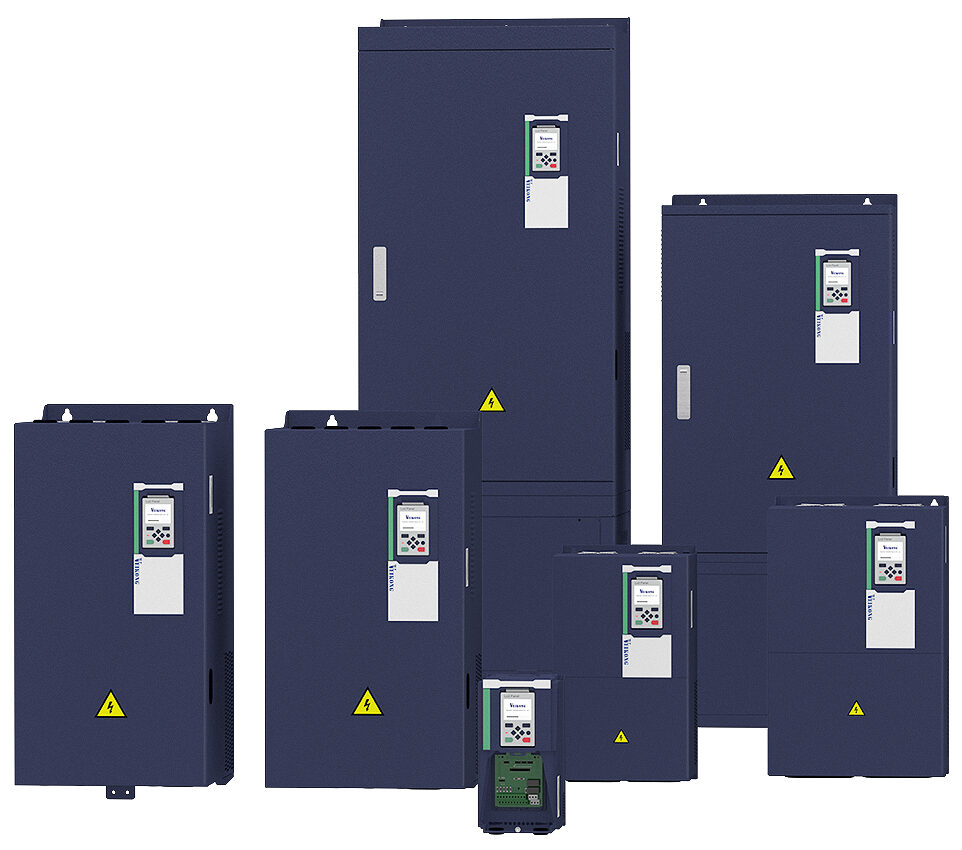
VFD530
Second candidate for projects needing IM/PMSM, PG feedback and machine logic; the safety function is engineered separately.
Open technical pageAssess ATV320 and VFD530 in packaging, conveyor, textile and hoisting machinery by motor, brake, safety, fieldbus and panel conditions.
VFD530 can be a candidate in redesignable machines requiring IM/PMSM control and PG feedback. ATV320's certified functions such as STO, SS1 and SLS are not considered transferred to VFD530 merely by name or without an external circuit.
The exact configuration is selected after engineering review.
Second candidate for projects needing IM/PMSM, PG feedback and machine logic; the safety function is engineered separately.
Open technical page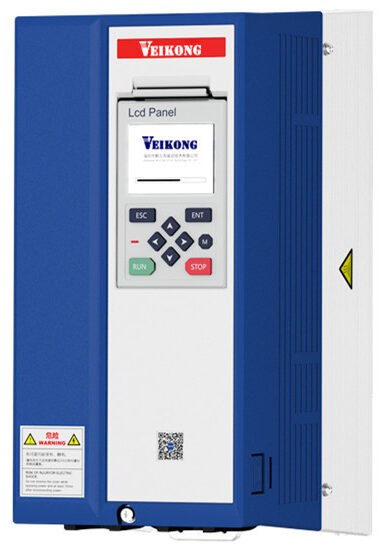
High-performance family to assess for closed-loop speed, torque or position duties; encoder and fieldbus options are selected per model.
Open technical pageThe table explains product architectures; it is not an exact order-code selection.
| Validation area | Schneider Altivar Machine ATV320 | Veikong / ProControl candidate |
|---|---|---|
| Machine profile | ATV320 is positioned for conveyors, packaging, material handling and similar machine applications in the 0.18–22 kW range. | VFD530 is the primary candidate in the shared current window for machine, hoisting and brake logic; VFD580 is secondary for more advanced position/torque needs. |
| Motor and feedback | Schneider publishes asynchronous, synchronous, PM and BLDC motor scope for ATV320; variant and setup matter. | VFD530 focuses on IM/PMSM and optional PG closed loop; BLDC or existing-encoder compatibility is not assumed without documentation. |
| Hoisting and brake logic | ATV320 application functions operate together with the machine sequence and safety controller. | VFD530 hoisting/brake logic is commissioned with mechanical-brake open/close feedback and load-slip testing. |
| Functional safety | The ATV320 product page lists certified safety functions including STO, SLS and SS1. | Only functions evidenced in official VFD530 certification are used; missing functions are implemented with a safety PLC and suitable contactors. |
| Communications | ATV320 connects Modbus and CANopen, plus several fieldbus options, to the machine network. | VFD530 can be assessed with Modbus, CANopen, PROFINET or TCP; device file and cycle time are verified in the PLC. |
| Mechanical and EMC | ATV320 book/compact form, IP/EMC and mounting clearances depend on the exact reference. | Panel holes, cable shielding, EMC filter, ventilation and braking-resistor layout are redrawn for VFD530. |
No. It is not a direct substitute until exact model, electrical, protocol-role, mechanical, software and certification checks pass.
The exact existing code, diagram or I/O list, PLC/network data, supply, environment and special functions in use.
A certified safely limited speed function is not equivalent to a normal speed-limit parameter. A suitably certified drive or external safety solution is required.
Official manufacturer sources: Schneider Altivar Machine ATV320 official page · Schneider ATV320 official catalogue · Veikong VFD530 official product page · Veikong VFD580 official product page
This content compares manufacturer-published data under the same project requirement; it does not guarantee direct substitution or project compatibility. ProControl engineering must validate exact model, revision, protocol, electrical, safety and environmental conditions.
Share the exact existing code, I/O list, network and environment so we can identify the right solution without assumptions.