Supports two-channel SSI encoder input, frame length, LSB and MSB can be set
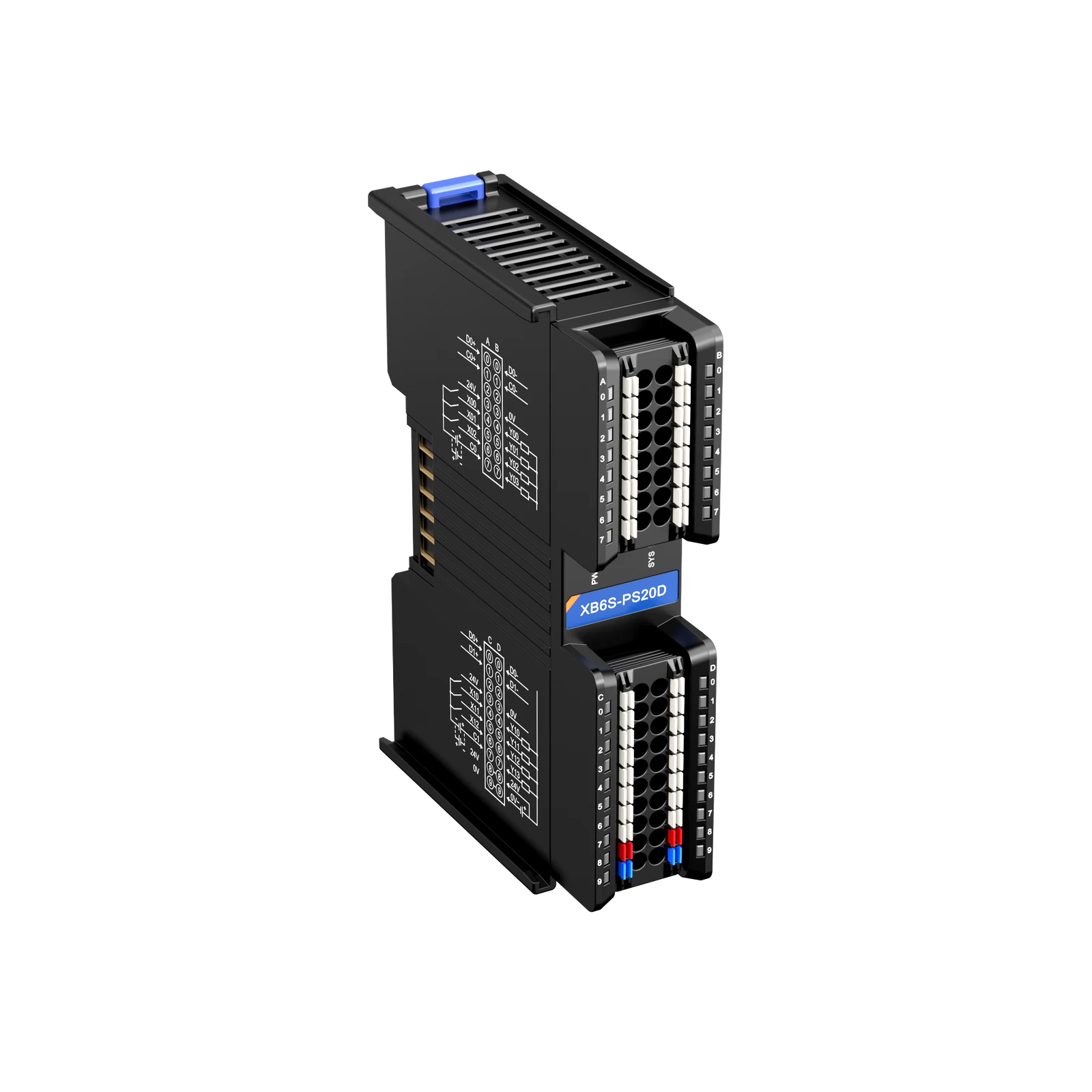
Solidot · Pulse Counter Module
XB6S-PS20D
The new generation slice SSI absolute encoder counting module, using X-bus bottom bus, is compatible with our company's XB6S series coupler modules. It supports dual-channel SSI encoder input, counting, probe latching and other functions. The module occupies a small space, has high data reliability and real-time performance, and can be widely used in various industrial system equipment.
Pulse Counter Module
Number of Inputs6
Input Current4mA
Encoder Input2 channels
What defines this model
Review the published differences attached to this exact model code rather than only the general family.
Supports Gray code and binary code display
Supports latching the current count value when a voltage change occurs on the probe input pin
6
Place in the system architecture
Treat network, product and field layers as one validation flow.
Network and host-controller compatibility
Channel, interface and function selection
Power, connection, environment and mechanical layout
Technical parameters
Values come from Solidot's current official model record and must be reconfirmed for the product revision.
Interface Parameters
| Refresh Rate | 1ms |
|---|---|
| Connection Method | Reed Contact |
| Process data volume: Downlink | 2Bytes |
| Process data volume: Upstream | 26Bytes |
| Data Transfer Medium | X-bus backplane bus |
| Data Transfer Rates | 6Mb/s |
| Electrical Isolation | Yes |
Technical Parameters
| Module Abnormality Self-Recovery | Support |
|---|---|
| diagnosis | Support |
| Alarm | Support |
| Firmware Upgrade | Support |
| Operating Temperature | -20℃~+60℃ |
| Relative Humidity | 95%, no condensation |
| Storage Temperature | -40℃~+80℃ |
| Protect. Class | IP20 |
| Module Size | 106.4×25.7×72.3mm |
| Weight | 110g |
Digital Input
| Nominal Voltage | 24VDC(15V~30V) |
|---|---|
| Number of Inputs | 6 |
| Transistor Polarity | NPN/PNP |
| Input Current | 4mA |
| Electrical Isolation | 500VAC |
| Indicator | Green LED |
| "0" Signal Voltage | -3V~+5V/0.9mA or less (between COM and each signal) (PNP)11V~30V/2.1mA or more (between COM and each signal) |
| “1” Signal Voltage | 11V~30V/2.1mA or more (between COM and each signal) (PNP) -3V~+5V/0.9mA or less (between COM and each signal) (NPN) |
| Isolation Method | Optocoupler Isolation |
Digital Output
| Nominal Voltage | 24VDC(15V~30V) |
|---|---|
| Number of Outputs | 8 |
| Transistor Polarity | NPN |
| Load Type | Resistive load, Inductive load |
| Max. Output Current | Max:500mA |
| Port Protection | Overcurrent Protection |
| Electrical Isolation | 500VAC |
| Indicator | Green LED |
| Isolation Method | Optocoupler Isolation |
Functional Parameters
| Probe Function (High-Speed Hardware Latching) | Support |
|---|---|
| Encoder Input | 2 channels |
| Encoder signal type | Differential signal, 5V |
| Data frame length | 10~40 bits |
| Position Value Format | Supports Gray code or binary |
| LSB/MSB Position Value | Can be set |
| SSI encoder clock frequency | ≤2.0MHz |
| Read Interval Time | Can be set |
Product images
Images are official source records for the same model.
Official files
Only links published by the manufacturer for this model are listed.
Frequently asked questions
Core checks before selection and commissioning.
Which industrial network does XB6S-PS20D support?
Network support must be confirmed from the exact model code and current official documentation.
What are the principal published specifications?
Number of Inputs: 6; Input Current: 4mA; Encoder Input: 2 channels; Number of Outputs: 8
How should this model be selected?
Evaluate network, channel function, power, environment, wiring and mechanical placement as one configuration. ProControl can verify the final bill of materials.
Other models in this category
Compare protocol, channel architecture and environmental limits.
Manufacturer source
Technical data and images are based on the current official Solidot product record. Verify revision-sensitive values before ordering or commissioning. Open official record
Validate the right Solidot XB6S-PS20D architecture with ProControl
Share the network, signal count, environment and installation constraints; our engineering team will review the complete configuration.